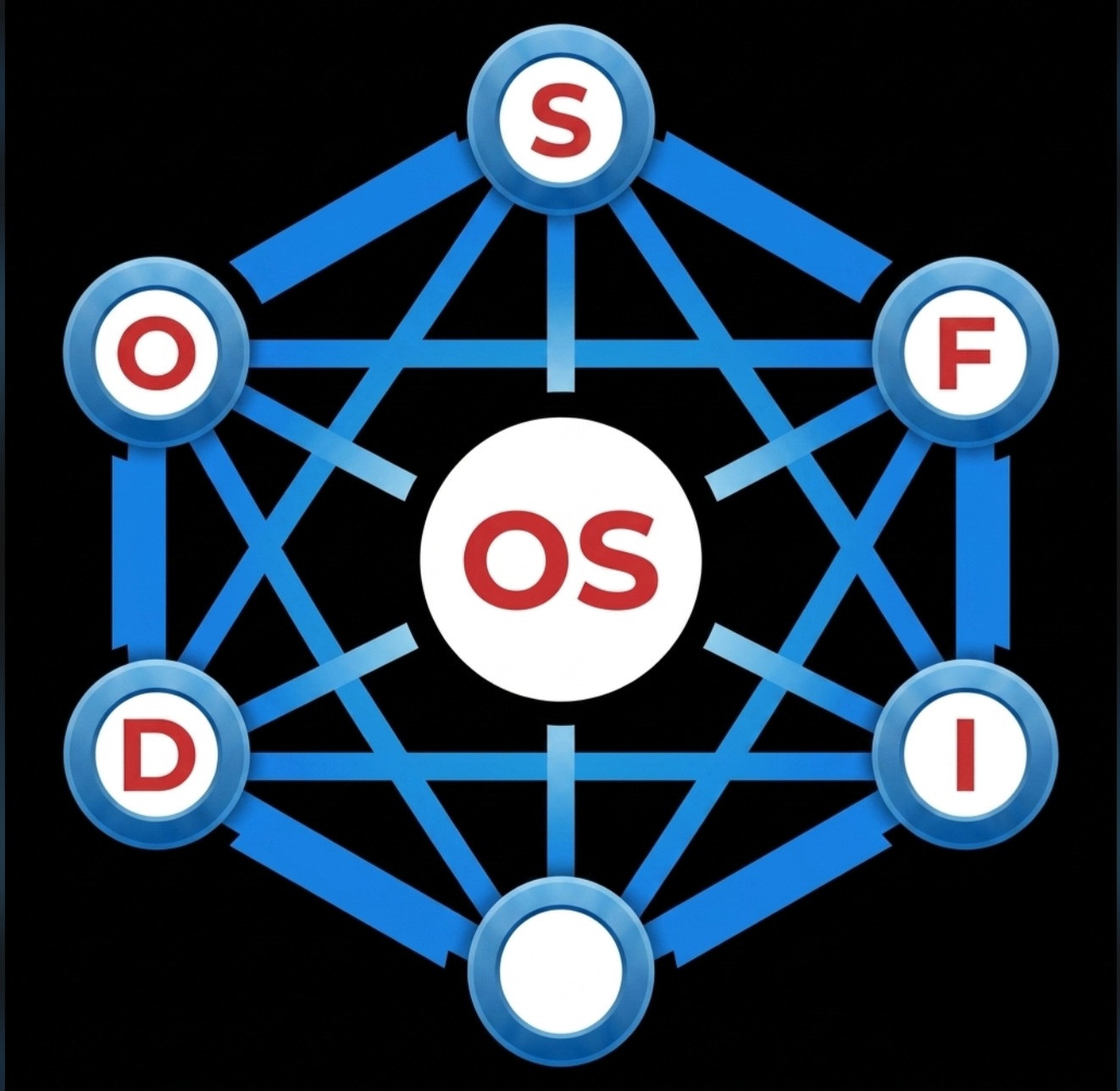
Open-Surface Architecture
DOSFI is built on a closed-core, open-surface architecture designed to protect the sovereign components of the system while enabling global participation, developer innovation, and ecosystem growth. This model ensures that DOSFI remains secure, mission-locked, and non-replicable, while still providing the tools developers need to build mesh-native applications and integrate with the distributed inference fabric.
Closed-Core (Sovereign Components)
The closed-core represents the protected, non-public foundation of DOSFI. These components are never exposed, never open-sourced, and never shared, ensuring the system remains sovereign, secure, and impossible to clone.
These components define how inference flows, how workloads are scheduled, how devices participate, and how the mesh maintains safety, efficiency, and sovereignty. They remain permanently protected under the DOSFI Foundation.
Open-Surface (Developer-Facing Components)
The open-surface is the part of DOSFI intentionally made accessible to developers, builders, researchers, and integrators. These components accelerate adoption, enable innovation, and allow the ecosystem to grow — without exposing the sovereign core.
These materials allow developers to build on DOSFI, integrate with the mesh, and understand the system's behavior — without revealing internal logic or proprietary algorithms.
Protects Sovereignty
The closed-core ensures DOSFI cannot be cloned, forked, or captured by external entities. This protects the integrity of the distributed inference fabric.
Enables Safe Ecosystem Growth
The open-surface gives developers everything they need to build, learn, and integrate — without risking exposure of sensitive components.
Prevents Trade-Secret Leakage
By keeping the core sealed, DOSFI avoids the risks seen in other companies where internal architecture was exposed or misused.
Supports Global Adoption
Open SDKs, ABIs, and documentation make DOSFI accessible to developers, enterprises, researchers, blockchain ecosystems, and AI builders — accelerating adoption without compromising security.
Maintains Mission-Lock
The architecture ensures DOSFI remains independent, sovereign, and aligned with its long-term purpose.
Through the Open-Surface
Developers interact with DOSFI through the open-surface. All interactions occur without touching the closed-core. This ensures the sovereign foundation remains protected while giving builders everything they need to create, integrate, and participate in the distributed inference ecosystem.
DOSFI's open-surface architecture provides the perfect balance between sovereignty, security, developer accessibility, ecosystem growth, and long-term protection.