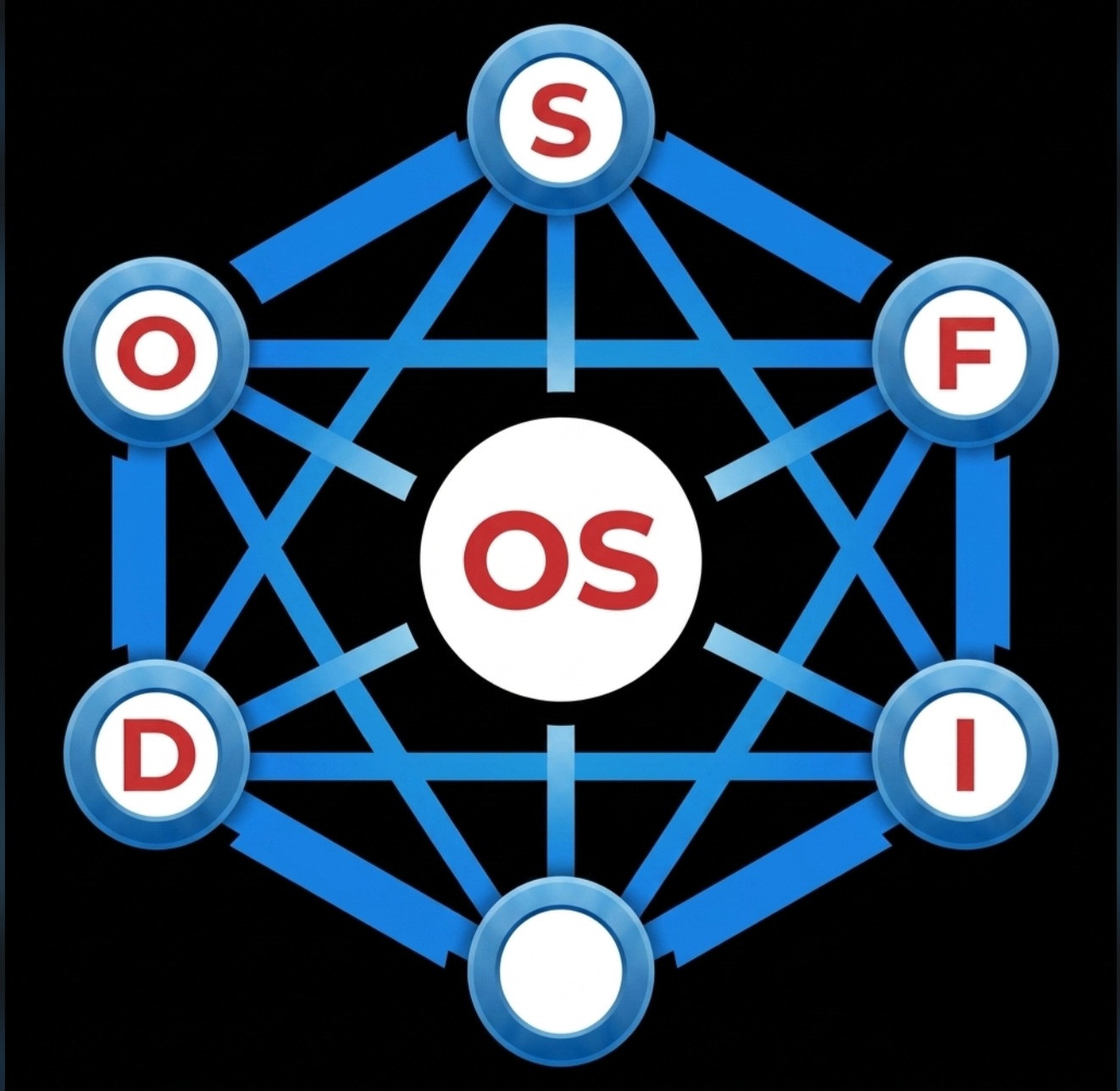
DOSFI, MeshInfer, Vital, and MNE — one unified stack.
DOSFI is the operating system. MeshInfer.AI is the runtime. Vital settles compute work as Distributed Intelligence Units. MeshNativeExchange converts them into platform value. Together they form a complete distributed intelligence economy.
The engine under every DOSFI shard.
MeshInfer.AI is the proprietary inference runtime that DOSFI assigns to every compute shard. It runs on-device, adapts to hardware, verifies execution, and returns cryptographically attested results. Developers do not call MeshInfer.AI directly — DOSFI handles the assignment automatically based on workload type and privacy tier.
To target a specific model from the MeshInfer registry, set model: "meshinfer/model-name" in your task submission. DOSFI validates availability and routes accordingly.
Inference Runtime
MeshInfer.AI provides the execution layer for every DOSFI inference shard. It runs on-device, optimizes model loading across heterogeneous hardware, and verifies shard output before returning results.
Model Registry
Operators access a curated model registry through MeshInfer.AI — from open-weight LLMs to specialized vision and audio models. Models are hash-verified at assignment time.
Shard Attestation
MeshInfer.AI attests each execution by generating a cryptographic proof of execution. DOSFI verifies these proofs before aggregating shard results, ensuring tamper-proof inference.
Dynamic Optimization
The runtime adapts to node hardware in real time — quantizing models, adjusting batch sizes, and partitioning transformer layers across multi-node groups to maximize throughput.
// Route an inference task to a specific MeshInfer model
const task = await mesh.tasks.submit({
  workload: "inference",
  model: "meshinfer/llama-3-70b",      // from the MeshInfer model registry
  privacyTier: "tier-2",
  payload: { prompt: "Summarize the following document...", doc: longText },
  options: {
    maxShards: 8,                       // partition across up to 8 nodes
    minAttestationScore: 0.95,          // only accept shards with 95%+ attestation confidence
  },
});Compute work that earns value.
Vital is the settlement layer of the DOSFI ecosystem. Every verified shard generates a Distributed Intelligence Unit (DIU) — a unit of economic value that flows from workload submitters to the node operators who performed the work.
Vital is not a cryptocurrency. DIUs are metered compute credits recorded in a settlement ledger, redeemable through MeshNativeExchange. Operators never interact with Vital directly — DOSFI emits settlement events automatically on task completion.
DIU Metering
Every completed and verified shard generates a Distributed Intelligence Unit (DIU) event. DOSFI emits these events automatically — operators do not need to instrument settlement manually.
Node Reward Distribution
Vital routes DIU events to the node operator's account. Distribution is proportional to verified shard completion and weighted by the task's privacy tier and complexity.
Operator Dashboard
Node operators view their earned DIUs, pending settlements, and historical performance through the Vital dashboard — accessible from the Partner Portal.
Fraud-Resistant Verification
Only shards that pass DOSFI's multi-node cross-verification receive DIU credit. Incomplete, timed-out, or tampered shards are excluded from settlement automatically.
Convert compute value into platform access.
MeshNativeExchange (MNE) is the redemption and billing layer that connects Vital DIU balances to real platform value. Node operators redeem DIUs for compute credits, API quota, or partner service access. Enterprise operators can link Stripe for automatic overage billing.
DIU Redemption
MeshNativeExchange (MNE) is the redemption layer for Vital DIUs. Operators convert earned DIUs into compute credits, API quota expansions, or partner service access.
Marketplace Access
Approved partners list services, models, and compute capacity on MNE. DOSFI apps can acquire resources programmatically via the MNE API, billed against the operator's DIU balance.
Billing Integration
Enterprise operators can link their MNE account to a Stripe billing instrument. Overages beyond DIU balance are invoiced automatically — no manual reconciliation required.
Rate Management
MNE enforces operator-declared rate policies on compute access. DOSFI routes workloads through MNE's billing gateway when operators have enabled marketplace compute sourcing.
// Query MNE balance via the DOSFI SDK
const balance = await mesh.mne.balance();
console.log(balance.diu);         // earned DIU balance
console.log(balance.credits);     // spendable compute credits

// Redeem DIUs for compute credits (1 DIU = 10 compute credits at current rate)
await mesh.mne.redeem({ diu: 100 });

// List available marketplace offerings
const offerings = await mesh.mne.marketplace.list({ type: "compute" });Production-grade testing before you go live.
The DOSFI 20-node test mesh is a dedicated sandbox environment that mirrors production behavior exactly — same scheduler, same routing engine, same attestation. It does not generate real Vital settlement events.
Request Access
Enterprise and Pro plan operators request sandbox credentials via the Partner Portal. Access is provisioned within one business day.
Configure SDK for Sandbox
Set env: 'sandbox' in DOSFI.connect(). The SDK automatically routes to the 20-node test mesh without additional configuration.
Submit Test Tasks
Submit tasks normally. The 20-node mesh mirrors production behavior: full shard partitioning, routing, attestation, and result aggregation — with synthetic telemetry.
Review Telemetry
Sandbox tasks emit full routing traces, shard timelines, and readiness scores. Use these to tune privacy tier selection and task partitioning before going live.
Validate and Promote
Once your app behaves correctly on the 20-node mesh, flip env: 'production' to connect to the full DOSFI network. No code changes required.
// Connect to the 20-node sandbox mesh
const mesh = await DOSFI.connect({
  token: process.env.DOSFI_SANDBOX_TOKEN,
  env: "sandbox",          // routes to the 20-node test mesh
});

// Submit a task — behaves identically to production
const task = await mesh.tasks.submit({
  workload: "inference",
  model: "meshinfer/llama-3-8b",
  privacyTier: "tier-1",
  payload: { prompt: "Hello from the test mesh!" },
});

// Inspect routing trace (only available in sandbox)
const trace = await task.routingTrace();
console.log(trace.shards, trace.nodeIds, trace.latencyMs);
Sandbox tokens are available to Pro and Enterprise plan operators via the Partner Portal.
Apps built native to the mesh.
These projects run on DOSFI today — each one built above the ABI boundary, governed by DOSFI Foundations, and executed across the global mesh. Hover any card to explore its technical spec.
MeshInfer LLM Gateway
A distributed large-language-model gateway that shards transformer inference across mobile and edge nodes, delivering low-latency completions without centralized GPU farms.
Distributed Vision Pipeline
A mesh-native computer-vision pipeline that partitions image and video frames across nodes for real-time object detection, segmentation, and tracking.
Molecular Mesh Simulator
A high-performance molecular dynamics simulator that distributes force-field calculations across the mesh, reducing simulation time from days to hours.
Mesh-Native Chat Runtime
A privacy-tiered conversational app runtime built on DOSFI — routing context and inference shards across geographically compliant nodes with end-to-end encryption.
Distributed Diffusion Studio
A generative media studio that partitions diffusion-model denoising steps across the mesh, enabling high-resolution image and video synthesis on heterogeneous devices.
Mesh Speech Transcription
A real-time speech-to-text service that streams audio chunks to the nearest compliant nodes, returning low-latency transcripts with on-device attestation.
DOSFI Workflow Orchestrator
A visual orchestrator for multi-step mesh-native workflows — chaining inference, routing, storage, and settlement across nodes with full state-machine tracking.
Distributed Document Intelligence
A retrieval-augmented generation platform that shards embeddings and retrieval across the mesh, enabling enterprise-scale document intelligence with privacy-tier enforcement.
Mesh Music Streaming
A distributed, zero-cloud music streaming platform where listeners play tracks, creators earn Vital, and nodes power audio delivery and recommendations using mesh-native routing and inference.