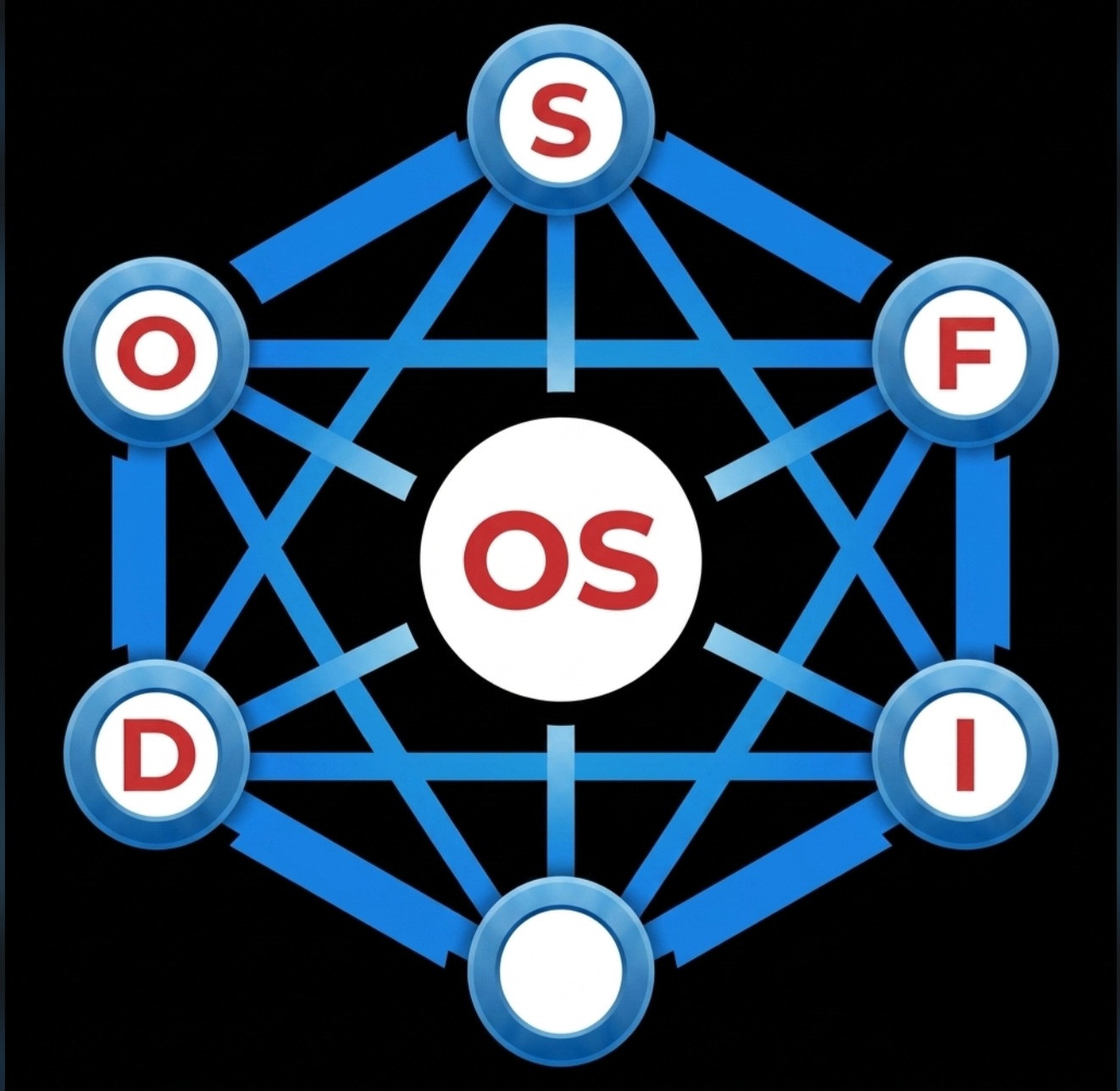
Compliance & Security Fabrics
Four interconnected fabrics — Identity, Policy, Privacy/Data, and Observability — enforce enterprise-grade compliance across the entire DOSFI mesh. Every mesh-native app inherits these controls automatically through the DOSFI App SDK.
One architecture. Four enforcement layers.
DOSFI security is not a single feature — it is four cooperating fabrics that together cover identity, access, data protection, and observability. Every mesh-native app, agent, and node inherits all four automatically.
FABRIC_01 / IDENTITY
Identity Fabric
Hardware-backed device keypairs, multi-factor authentication, short-lived session tokens, and full identity lifecycle management — key rotation, revocation, and device deregistration.
- TPM / Secure Enclave / Keystore keypairs
- FIDO2 + passkeys + biometrics
- Short-lived, continuously-validated sessions
- Key rotation & revocation
- Device deregistration
FABRIC_02 / POLICY
Policy Fabric
A centralized policy engine enforcing role-based (RBAC) and attribute-based access control (ABAC), routing rules, consent, and purpose limitation across the entire mesh.
- RBAC + ABAC enforcement
- Routing policy rules
- Consent & purpose tagging
- Purpose limitation enforcement
- Versioned config with rollback
FABRIC_03 / PRIVACY_DATA
Privacy / Data Fabric
Local-first inference, encryption at rest and in transit, data minimization by default, and full data subject rights — deletion and export — across every node.
- Local-first inference (PHI on-device)
- Encryption at rest + in transit
- Data minimization by default
- Right to delete (wipe + invalidate)
- Right to export (JSON / CSV)
FABRIC_04 / OBSERVABILITY
Observability Fabric
Immutable audit logs, mesh-wide health monitoring, anomaly detection, security alerts, and versioned configuration management with approval workflows.
- Immutable audit logs
- Node health monitoring
- Anomaly detection + alerts
- Versioned config management
- Approval workflows + rollback
NIST 800-63B
Digital Identity Guidelines
Primary Fabric
Identity Fabric
SOC 2
Security, Availability, Confidentiality & Privacy
Primary Fabric
Policy Fabric + Observability Fabric
HIPAA
Health Data Protection
Primary Fabric
Privacy / Data Fabric
GDPR
Privacy by Design
Primary Fabric
Privacy / Data Fabric
Which fabric enforces which framework.
Each compliance framework draws its enforcement from one or more fabrics. FULL means the fabric is the primary enforcement layer; PARTIAL means the fabric supports enforcement alongside another fabric.
| Framework | Identity | Policy | Privacy/Data | Observability |
|---|---|---|---|---|
| NIST 800-63B | FULL | PARTIAL | — | PARTIAL |
| SOC 2 | PARTIAL | FULL | PARTIAL | FULL |
| HIPAA | PARTIAL | FULL | FULL | FULL |
| GDPR | — | FULL | FULL | PARTIAL |
Every app inherits compliance. Automatically.
Mesh-native apps do not implement compliance controls themselves. The DOSFI App SDK applies all four fabrics at the ABI boundary — identity binding, policy enforcement, privacy defaults, and audit logging are inherited by every app, agent, and workflow without per-app configuration.
Automatic Identity Binding
Every mesh-native app inherits hardware-backed identity, MFA, and session management automatically — no per-app identity code required.
Policy Inheritance
RBAC, ABAC, routing rules, and consent enforcement are applied by the SDK at every API call — apps cannot bypass the Policy Fabric.
Privacy by Default
Local-first inference, data minimization, and encryption are the SDK default. Apps must explicitly opt in to mesh routing for sensitive data.
Audit-Ready Out of the Box
Every app action is automatically logged to the immutable audit trail with full identity, purpose, and node attribution.
How the four fabrics integrate.
Identity Fabric
- Hardware-backed keys
- MFA (FIDO2 / passkeys)
- Short-lived sessions
- Lifecycle: rotate / revoke / deregister
Policy Fabric
- RBAC + ABAC rules
- Routing policies
- Consent & purpose tags
- Purpose limitation
Privacy / Data Fabric
- Local-first inference
- Encryption at rest + transit
- Data minimization
- Delete + export APIs
Observability Fabric
- Immutable audit logs
- Node health monitoring
- Anomaly detection + alerts
- Versioned config + rollback